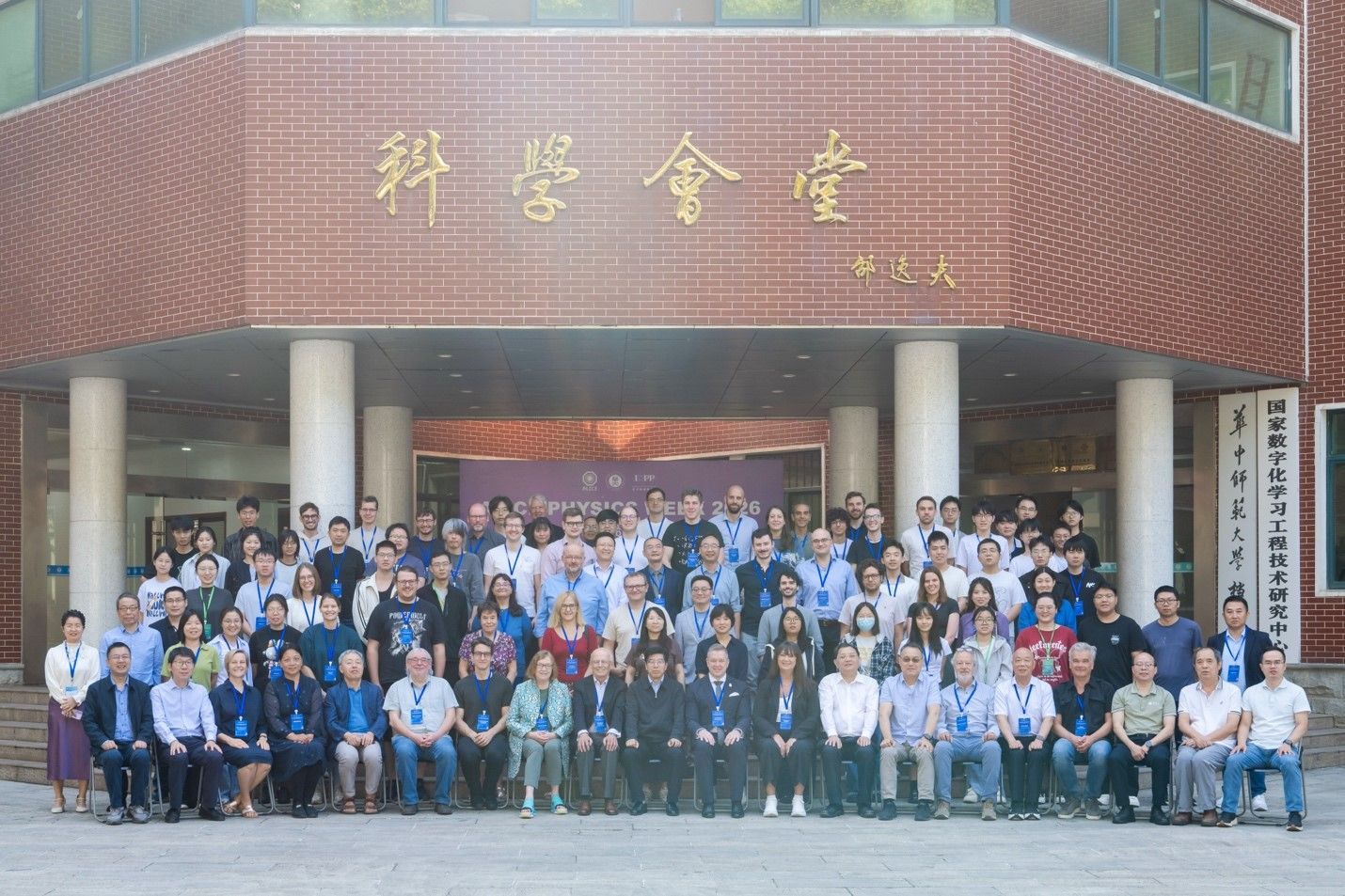
From October 12 to 16, 2026, the annual ALICE Physics Week (APW) workshop of the ALICE Collaboration was successfully convened at Central China Normal University (CCNU). A Large Ion Collision Experiment (ALICE) is one of the four main experiments at the Large Hadron Collider (LHC) of CERN. Jointly organized by the ALICE Physics Board and CCNU, the conference was chaired by Professor Xiaoming Zhang from the College of Physical Science and Technology at CCNU. Over 100 experts, researchers, and scholars from CERN and leading institutions across China, Switzerland, Germany, France, Italy, the United Kingdom, Norway, Denmark, Japan, India, and South Korea gathered on the Guizi Mountain campus to discuss recent data analysis progress, review the latest physics findings, and plan future collaborative milestones.
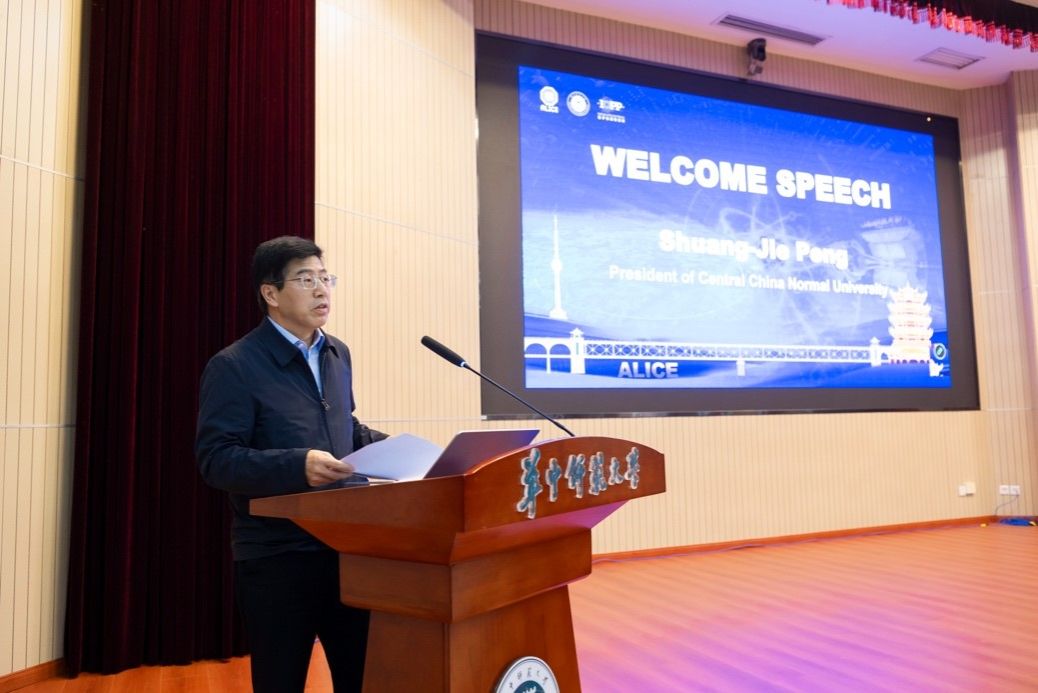
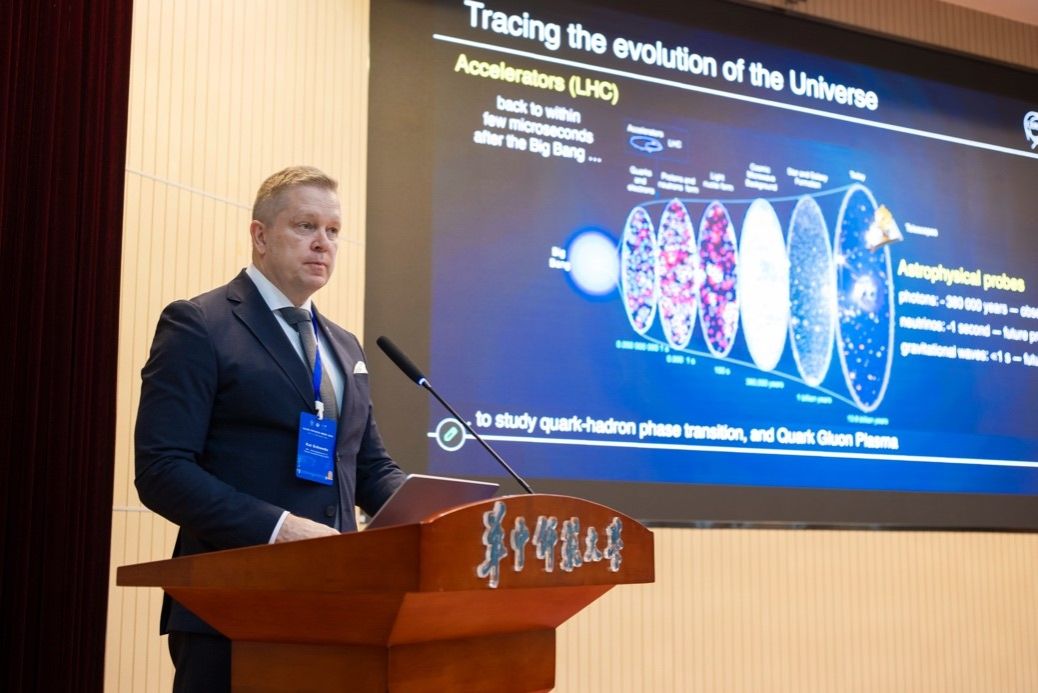
The opening ceremony on the morning of October 12 was presided over by Professor Guang-You Qin, Dean of the College of Physical Science and Technology. Professor Shuangjie Peng, President of CCNU, delivered the opening address, extending a warm welcome to all international and domestic participants and highlighting CCNU’s heritage in physics as well as its achievements in research platform development. Kai Schweda, ALICE Collaboration Spokesperson and researcher at the GSI Helmholtz Centre for Heavy Ion Research, spoke on the scientific mission of the ALICE experiment—probing the quark-gluon plasma to simulate the state of the universe moments after the Big Bang using relativistic heavy-ion collisions. Organizing Committee Chair Professor Xiaoming Zhang then briefed the audience on the preparations and agenda. Following this, Dr. David Dobrigkeit Chinellato, Chair of the ALICE Physics Board and researcher at the University of Vienna, reported on recent advances in data taking and physics analysis, presented updates on paper approvals and recent publications, and outlined key research goals and deployment strategies for 2027.
The workshop fostered in-depth discussions on cutting-edge topics in ALICE physics, including anisotropic flow in quark matter, jet quenching, flavor probes, photon and dilepton signatures, exotic hadron interactions, nuclear-modified parton distribution functions (nPDFs), and physics opportunities for the upcoming LHC Runs 4 and 5. In addition to core physics sessions, the program featured dedicated tracks on next-generation computing and software frameworks, invited theoretical talks, topical workshops, and public science outreach. As part of the outreach initiatives, renowned scholars—including Professor Pengfei Zhuang of Tsinghua University, ALICE Spokesperson Kai Schweda, and Professor Heng-Tong Ding of CCNU—led specialized lectures, outdoor interactive sessions, and a Masterclass. These events offered undergraduate and graduate students a unique platform for direct engagement with world-leading physicists.
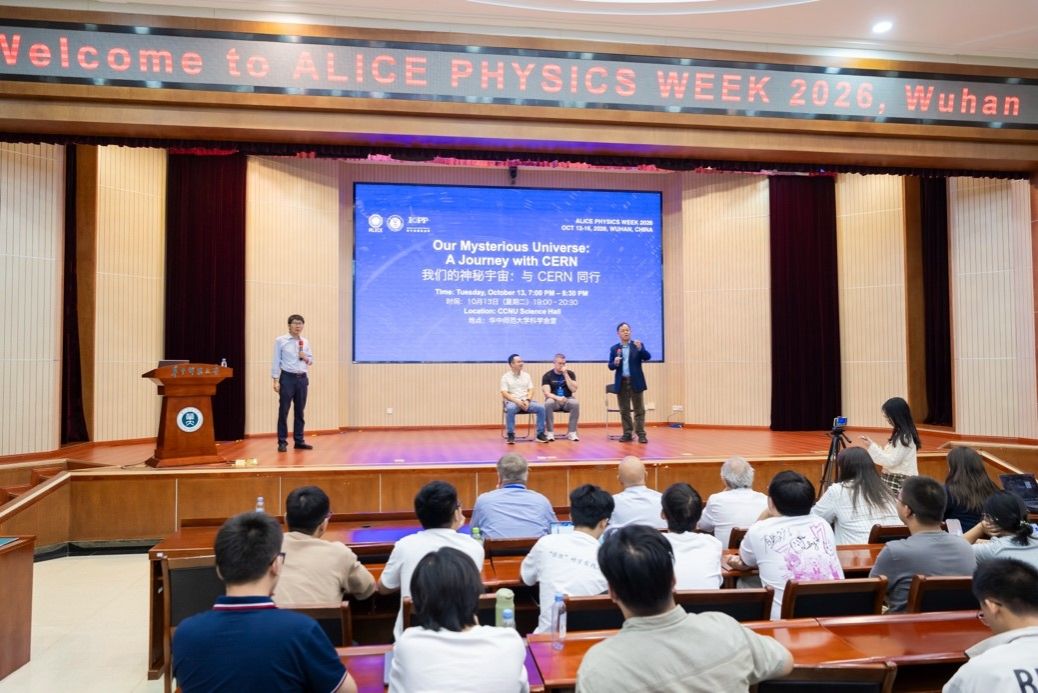
The annual ALICE Physics Week workshop serves as a cornerstone conference for coordinating physical analysis workflows and establishing major organizational milestones across the collaboration. Held at a critical juncture marked by intensive LHC Run 3 data analysis and ongoing detector upgrade planning, this marks the second time CCNU has hosted the prestigious event following its initial hosting in 2013. As the lead Chinese institution in the ALICE collaboration, CCNU’s hosting of the conference underscores the significant role played by Chinese teams in both physics analysis and detector technology R&D. The event provided a premier international platform to deepen global cooperation in high-energy nuclear physics, foster top-tier young talent, and enhance China’s academic standing and leadership within major international mega-science initiatives.