On the morning of November 11, 2025, the Fourth IOPP Colloquium was successfully held at the Institute of Particle Physics (IOPP) of Central China Normal University (CCNU). Professor Jianbei Liu from the Department of Modern Physics at the University of Science and Technology of China (USTC), who serves as the General Detector Coordinator of the Super Tau-Charm Facility (STCF) project, delivered an enlightening academic lecture titled "The Super Tau-Charm Facility" to faculty and students of IOPP.
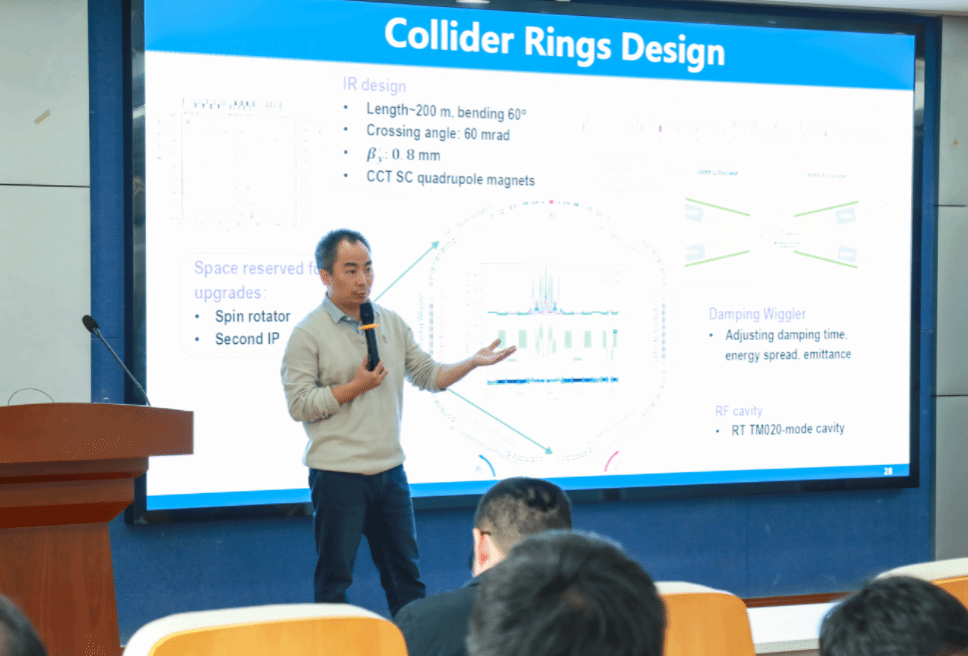
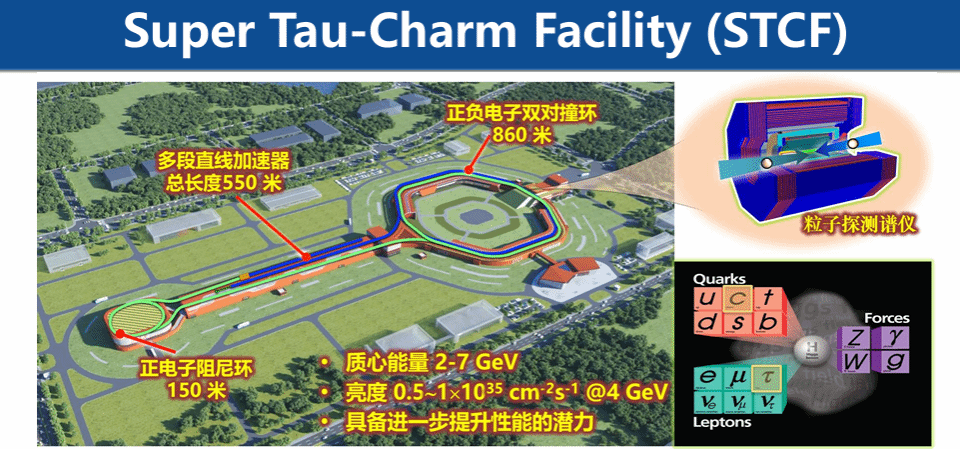
Professor Liu's presentation began with an overview of the evolution of particle colliders, systematically explaining the scientific significance and technical features of third-generation electron-positron colliders. He highlighted China's flagship project, the Super Tau-Charm Facility (STCF)—a next-generation collider designed with a luminosity higher than 0.5~1×10³⁵ cm⁻²s⁻¹ and an energy range covering 2-7 GeV. This facility will produce large numbers of tau leptons and hadrons in a clean environment, serving as a unique and powerful tool for studying how quarks form hadrons to understand quark confinement, as well as revealing the mystery of the space-time symmetry of fundamental interactions with unprecedented precision.
In his report, Professor Liu demonstrated STCF's three core scientific objectives through rich charts and data: strong interaction research, symmetry breaking exploration, and fundamental parameter measurement. In terms of technical progress, Liu Jianbei showcased the innovative design of STCF's accelerator and detector: the accelerator adopts a double-ring collision structure and Crab-waist collision scheme, while the detector integrates high-precision tracking systems, new particle identification systems (such as BTOF/DTOF), and electromagnetic calorimeters, achieving a momentum resolution of 0.5%@1 GeV/c and π/K identification capability better than 4σ at 2 GeV/c. He also mentioned that the STCF key technology R&D project was launched in 2023 with 364 million yuan in funding support, and prototypes of core components such as superconducting magnets and fast timing detectors have passed beam tests.
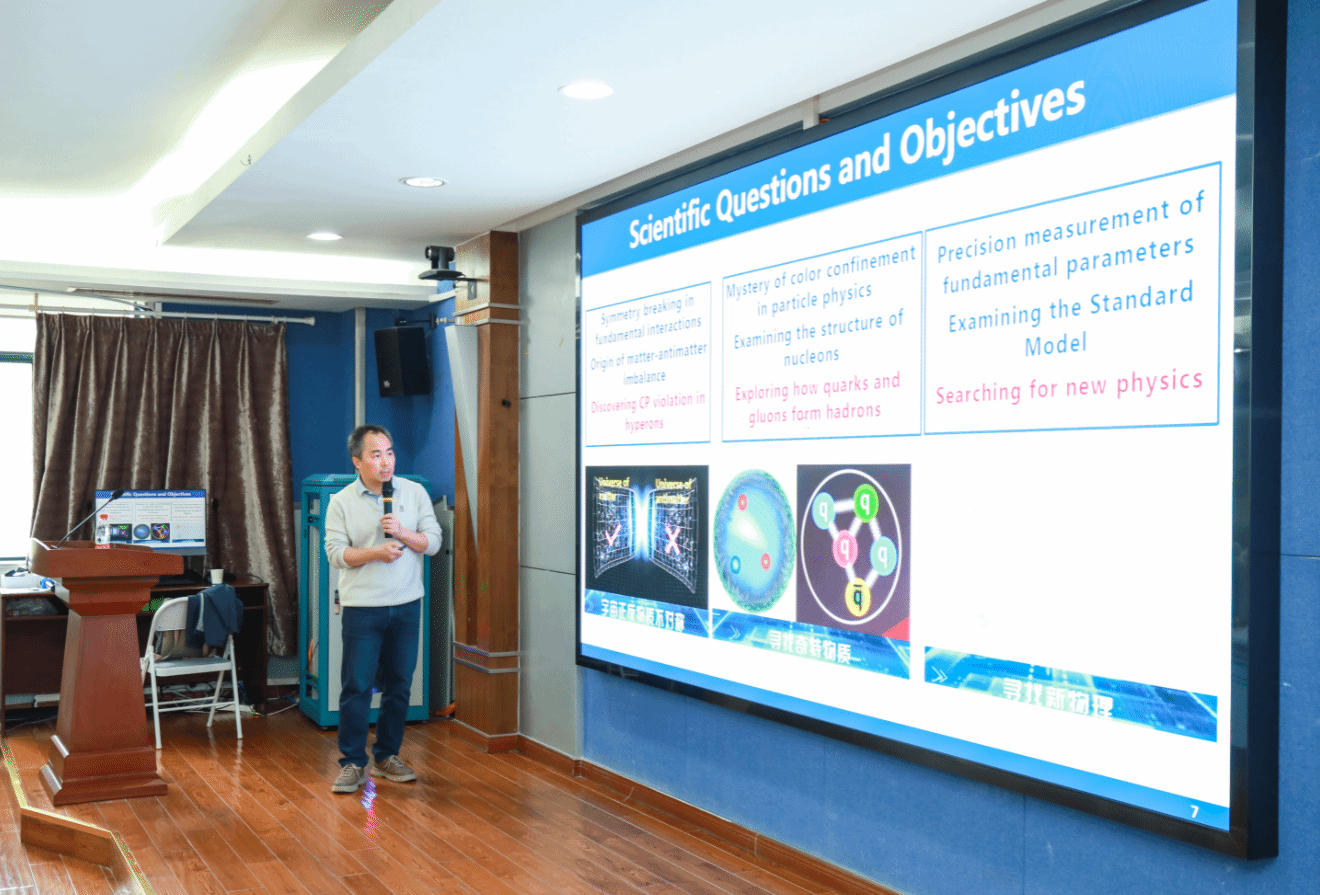
During the thematic discussion session, Liu Jianbei exchanged views with teachers and students of the Institute of Particle Physics at Central China Normal University on the synergistic potential between STCF and major scientific facilities domestically and abroad (such as CEPC and EIC). He pointed out: "STCF is not only an important milestone in the development of high-energy physics in China, but will also become a key node in the international particle physics research network, providing Chinese solutions for understanding the most basic structure of matter."
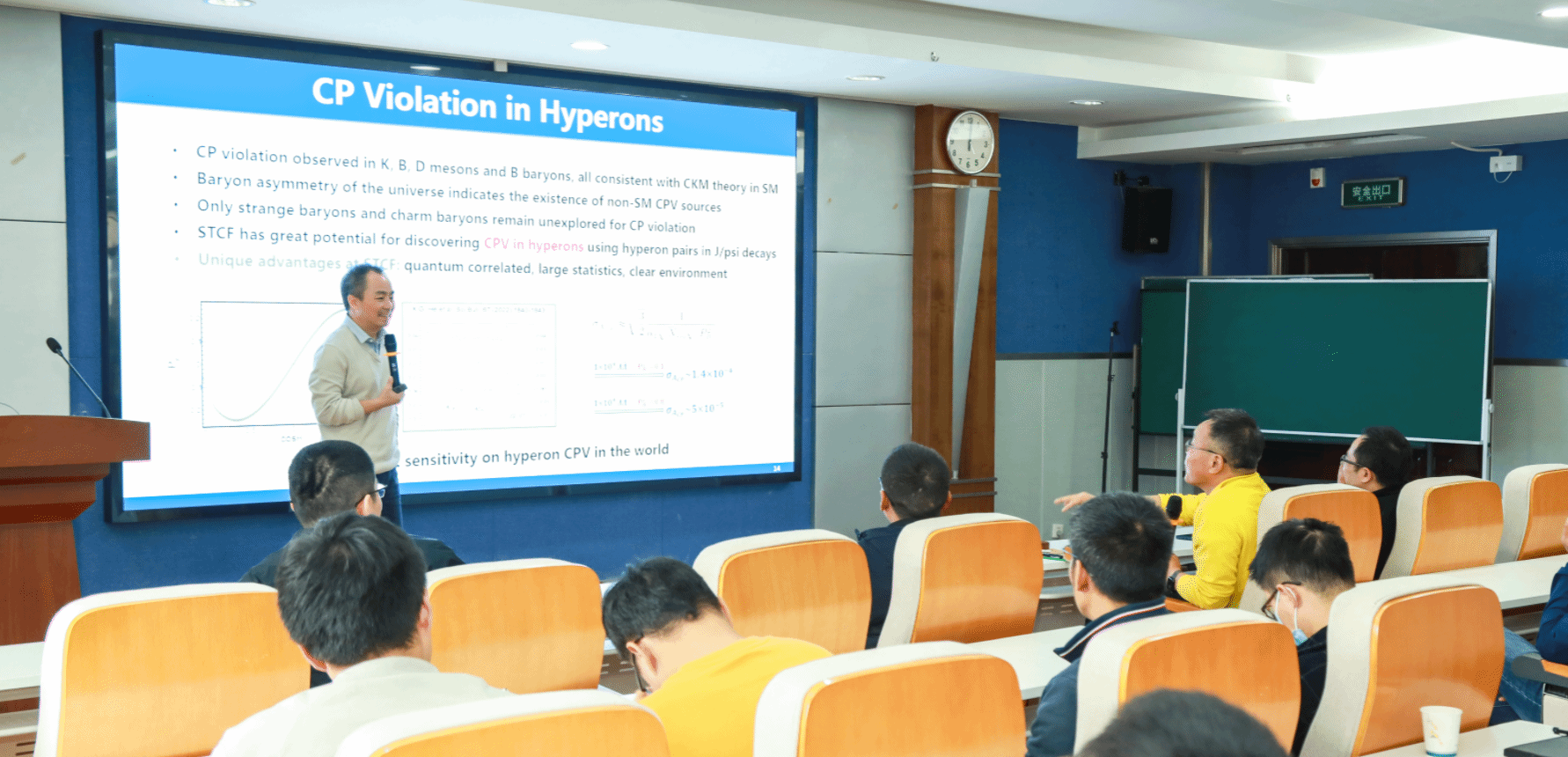
The IOPP Colloquium is a series of academic activities organized by the Institute of Particle Physics, designed to provide cutting-edge reports with both popular science and inspirational value for all teachers and students in the institute, promoting academic ecosystem construction and cooperative research atmosphere. This report demonstrated the construction progress and scientific research capabilities of China's major scientific facilities, provided a rare learning and exchange opportunity for participating teachers and students, and further highlighted the academic characteristics of "international perspective and interdisciplinary integration" of Central China Normal University.
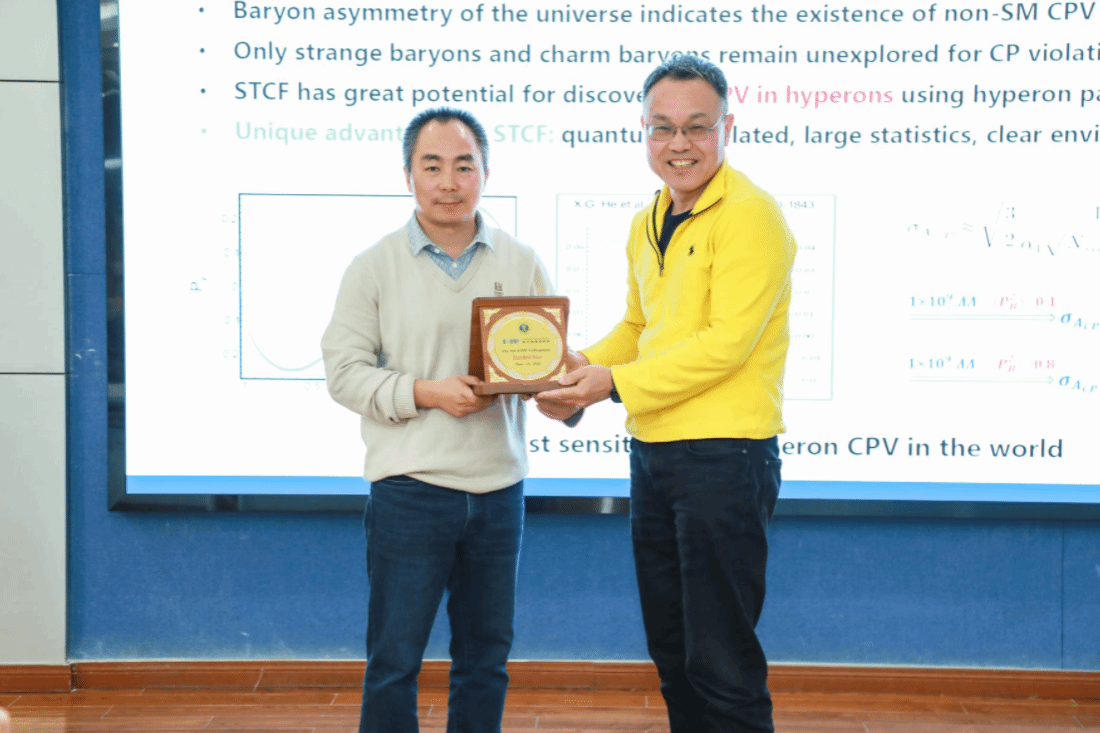
Professor Xin-nian Wang, Director of C3NT and IOPP, presented Professor Jianbei Liu
with the 4th IOPP Colloquium Commemorative plaque
Jianbei Liu is Professor of Physics at the department of modern physics of the University of Science and Technology of China, specializing in experimental high-energy physics. He earned his bachelor's degree from Tsinghua University in 2000 and received his Ph.D. from the Institute of High Energy Physics (lHEP) of the Chinese Academy of Sciences in 2005. He conducted postdoctoral research at IHEP from 2005 to 2007 and at the University of Michigan from 2007 to 2012. Since 2012, he has been working at the University of Science and Technology of China.
Professor Liu made major contributions to the design, development, and construction of the central tracking detector at the BESII experiment, and the first observation of vector boson scattering process at the LHC. He has also developed innovative technologies at the cutting edge of micro-pattern gaseous detectors.
Currently, as the general detector coordinator of the Super Tau-Charm Facility (STCF) project and a convener of the Physics &Detector Working Group of the Circular Electron-Positron Collider (CEP) proiect, Professor Liu is actively leading detector R&D for China’s next-generation collider experiments.
Professor Liu holds several academic positions, including executive council member of the Nuclear Electronics and Nuclear Detection Technology Branch of the Chinese Nuclear Society, member of the standing commitee of the High Energy Physics Branch of the chinese Physical Society, member of the International Committee for Micro-Pattern Gas Detectors, member of the BESIII technical board, and editorial board member of Chinese Physics C.
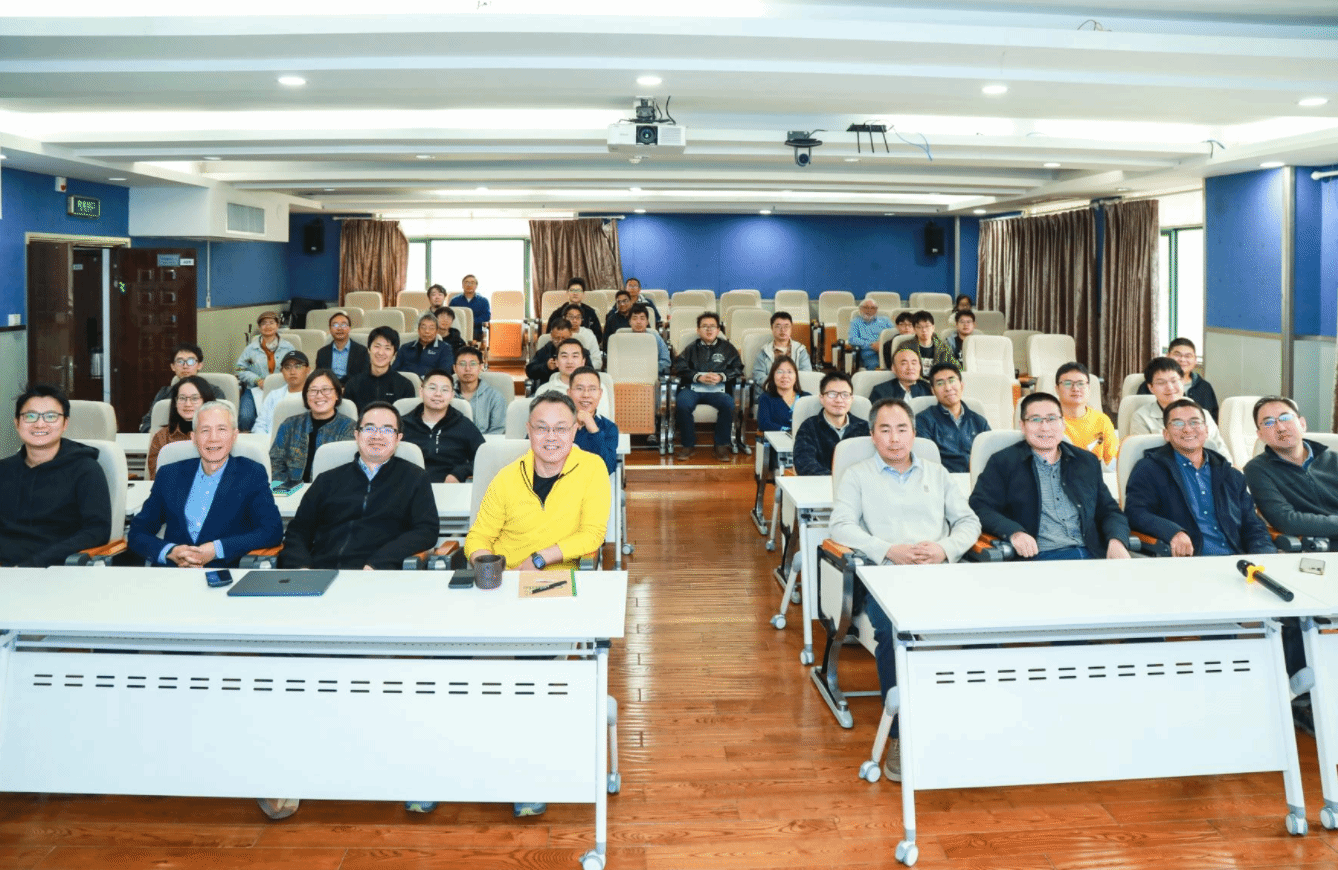
Group Photo of the 4th IOPP Colloquium
Correspondent: Xiangyu Shui
Proof-reader: Yaping Wang, Guangyou Qin